Wallet
Wallet concept
A wallet is a logical bundle of the addresses, keys, and features required for deposits and withdrawals. Wallets are created per platform, and you can create multiple wallets for the same platform. A single wallet can hold multiple addresses and keys.
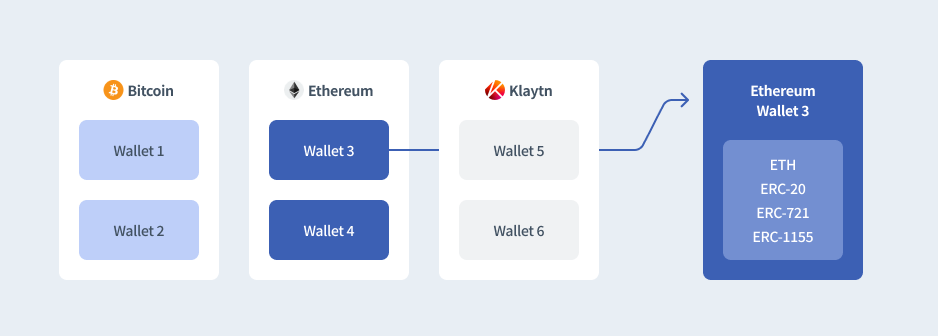
Coins and tokens of the same platform can be stored together in one wallet. However, assets from different platforms cannot be stored together in one wallet. For example, if you use Bitcoin and Ethereum, you must create a Bitcoin wallet and an Ethereum wallet separately. If you use Ethereum and Ethereum-based tokens, both assets can be stored in a single Ethereum wallet.
Address types
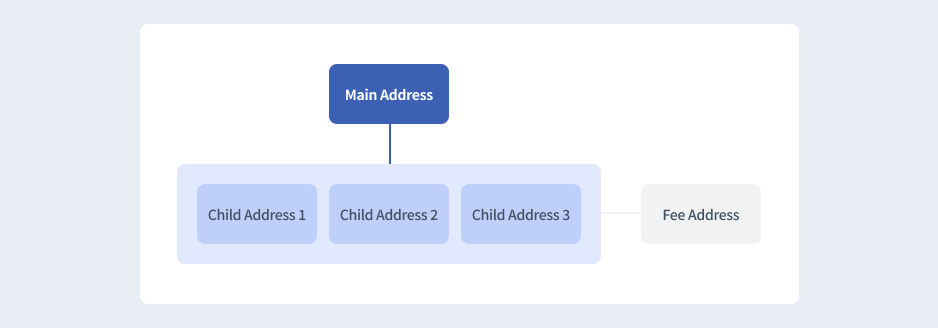
A single wallet can hold multiple addresses and keys. Addresses are divided into three types, with the following characteristics.
1. Main address
The main address is the address that represents the wallet, and only one exists per wallet. The main address is either created directly by the client when creating the wallet or generated automatically by the Octet system. The private key for the main address is managed jointly by the client and Octet, or managed by Octet.
- In a centralized wallet, all assets are stored in the main address, so the main address must be used.
- In a child address withdrawal wallet, assets are stored in, deposited to, and withdrawn from each child address, so the main address may not be used.
2. Child address
Child addresses are addresses under the main address, and generally one child address is issued per end user. Child addresses are generated sequentially from a mnemonic using the HD method. Since the mnemonic is managed by Octet, the private key for each child address is also managed by Octet. If you need the mnemonic, contact octet.team@walletone.io.
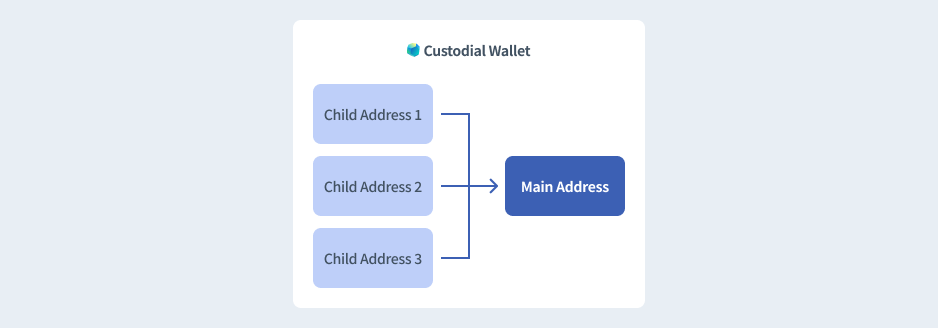
- In a centralized wallet, child addresses only serve as deposit addresses. Assets in child addresses are gathered to the main address and then withdrawn externally from the main address.
- In a child address withdrawal wallet, both deposits and withdrawals are possible from child addresses, so child addresses play a larger role.
3. Fee address
The fee address is the address that recharges fees to child addresses, and only one exists per wallet. The fee address is only used on platforms that support tokens and is generated automatically by the Octet system when the wallet is created. The private key for the fee address is managed by Octet.
Wallet types
Centralized wallet | Child address withdrawal wallet | |
|---|---|---|
Asset storage | Stored in the main address | Stored in the main address Stored in child addresses |
Gathering | Available | Not available |
Withdrawal | Withdrawn from the main address | Withdrawn from the main address Withdrawn from child addresses |
1. Centralized wallet
To build a centralized service such as an exchange or a wallet, you must use a centralized wallet. In a centralized wallet, assets deposited to child addresses from outside are gathered to the main address. The gathered assets are stored in the main address, and can only be withdrawn externally from the main address.
Examples
- Centralized exchanges (Binance, Bithumb, etc.)
- Centralized wallets (Tokenbank, Klip, etc.)
- P2E games
2. Child address withdrawal wallet
To comply with the travel rule or to be compatible with decentralized services such as DeFi, we recommend using a child address withdrawal wallet. In a child address withdrawal wallet, assets deposited to child addresses are not gathered to the main address. Each asset remains in the child address and is withdrawn externally from the child address. (Assets can also be deposited to and withdrawn from the main address.)

Examples
- Using DeFi services with a centralized wallet